
If your air conditioner is leaking water inside your Sacramento-area home, turn cooling off and protect the nearby floor or ceiling from further damage. A blocked condensate drain is one possible cause, but a frozen indoor coil, damaged drain pan, loose drain connection, or condensate pump problem can produce similar symptoms. The location of the water and what the system was doing before the leak help a technician find the source.
Do not assume the water means refrigerant is leaking: the clear water most homeowners see is usually condensation from the cooling process. If water is reaching electrical equipment, a ceiling is sagging, or the leak is spreading, stay clear of the affected area and arrange prompt professional help. A wet ceiling may need building or water-damage attention in addition to HVAC repair.
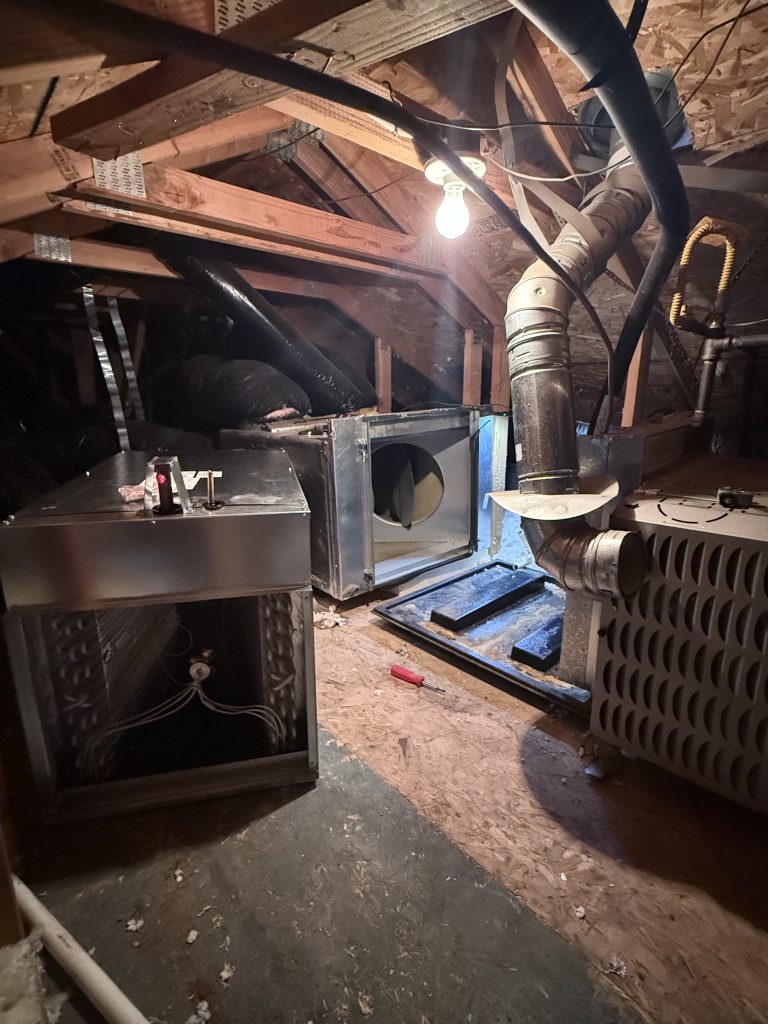
Why an air conditioner makes water
Warm indoor air passes over a cool evaporator coil. Some moisture in that air condenses on the coil, collects in a pan, and exits through a drain line or pump. Water leaving a properly routed drain outlet can be normal during cooling. Water dripping from the indoor cabinet, a ceiling, or a supply register is not normal and deserves investigation.
How much condensate forms depends on indoor moisture and operating conditions. Even in a relatively dry Sacramento summer, a central AC or heat pump in cooling mode can produce water. The important question is whether it is traveling through the intended drainage path rather than overflowing into the home.
Common reasons water appears indoors
A restricted condensate drain
Dust, debris, or buildup can slow or block the drain line. Water may then back up in the primary pan and spill from the cabinet or into a secondary safety pan. ENERGY STAR includes condensate-drain inspection in its HVAC maintenance checklist because a plugged drain can cause water damage and affect indoor humidity.
A frozen evaporator coil that is thawing
Low airflow or a cooling-system fault can allow ice to build on the indoor coil. When the system stops or the ice melts, the pan may be overwhelmed, or water may drip outside its normal path. A dirty filter is one possible airflow restriction, but ice can also involve blower, duct, coil, or refrigerant problems. Repeated icing needs diagnosis rather than another reset.
A damaged pan, loose fitting, or pump fault
A cracked or corroded drain pan cannot reliably collect water. A loose drain fitting can drip even when the line itself is open. Some installations use a condensate pump to lift water to an appropriate discharge point; a failed pump or blocked discharge can make water back up. The system’s layout determines which of these parts are present.
Safe first steps when you find an AC leak
- Turn cooling off at the thermostat. This stops the equipment from making more condensate. If water is near electrical components, do not touch wet equipment or attempt to open panels.
- Contain water only where it is safe. A towel or container may protect a dry, accessible floor. Do not stand beneath a sagging ceiling or use a ladder near wet electrical fixtures.
- Note where the water appears. Is it at the indoor unit, under a ceiling register, beside a drain outlet, or in a secondary pan? Take photos from a safe position.
- Check the homeowner-accessible filter. If it is heavily loaded, replace it with the correct size and type. Our Sacramento HVAC filter guide explains how to check the filter without guessing at a schedule.
- Arrange diagnosis if water returns, ice is visible, or cooling has stopped. Do not keep running the system to see whether it “dries out.”
A homeowner may be able to see whether an accessible drain outlet is visibly blocked, but do not pour chemicals into an unidentified pipe, disconnect a pump, or open the air-handler cabinet. An incorrect drain-line treatment can damage components or send water somewhere unintended. If you cannot positively identify the drain and follow your equipment’s instructions, leave clearing it to a technician.
What the leak location can tell you
Water beneath a closet air handler may point toward the primary drain, pan, fitting, or a thawing coil. Stains below an attic-mounted system can indicate overflow into the ceiling space, but the water can travel before it becomes visible indoors. A wet secondary pan or a cooling system that has shut off may be a safety-switch response to a drainage problem. Do not bypass that switch just to restore cooling.
Water near the outdoor condenser is different. Rain, irrigation, or condensation on refrigerant piping can create moisture outdoors without indicating an indoor drain failure. Ask a technician if you are unsure which component is producing the water; photos of the equipment and the wet area make that conversation more useful.
How a technician diagnoses the cause
A focused service visit should trace the water path rather than simply vacuuming a line and leaving. The technician may inspect the pan and fittings, confirm drain flow and slope, check a condensate pump or float switch if installed, and look for evidence of icing. If a coil froze, the next step is finding out why: filter restriction, blower performance, coil condition, duct airflow, and refrigerant-system operation are all possible considerations.
Repairs depend on the finding. Clearing a confirmed drain restriction is different from replacing a cracked pan or correcting a refrigerant-related icing problem. If cooling has also become weak or warm, our AC blowing warm air guide covers other symptoms to report during the visit.
Preventing the next indoor AC drip
At a cooling-season maintenance visit, ask for the condensate pan, drain, and any pump or overflow switch to be checked along with airflow and coil condition. A routine inspection cannot guarantee that a future blockage will never occur, but it can catch visible buildup, poor drainage, and damaged parts before they make a mess. ENERGY STAR lists drain inspection among typical professional maintenance tasks.
Keep up with filter changes according to your system and use. The filter protects airflow and the indoor coil, though changing it does not clear a blocked drain. If you are comparing maintenance proposals, our Rocklin AC tune-up guide explains what a useful visit should include and which findings deserve a clear explanation.
AC water-leak questions homeowners ask
Is water from the outdoor AC unit normal?
Moisture outdoors is not automatically a problem, especially around cold piping or after rain. A central air conditioner’s main condensate is normally collected at the indoor cooling coil and routed to its drain. Trace where the water starts before deciding it is a leak.
Can I keep using the AC if it only drips a little?
Not if the drip is inside the home or from the indoor equipment. Small leaks can damage flooring, drywall, or insulation over time. Turn cooling off and arrange diagnosis rather than relying on a towel as the repair.
Does water on the floor mean the refrigerant leaked?
Usually not. The visible clear liquid is commonly condensed water, while refrigerant circulates in a sealed system. However, a refrigerant fault can indirectly cause coil icing and a later water overflow. A technician must diagnose the actual cause.
Get the water source identified
Fusion Heating & Cooling can inspect an AC or heat pump that is leaking water, trace the drain and coil conditions, and explain the appropriate repair. Review our HVAC services or contact Fusion to request an evaluation. Regular hours are 7 a.m.–5 p.m. every day, with emergency calls available 24/7. If water is affecting wiring, fixtures, or a sagging ceiling, stay clear and address the immediate property-safety hazard first.