When wildfire smoke reaches the Sacramento region, keep doors and windows closed, set compatible HVAC equipment to recirculate, use the highest-efficiency filter the system can safely handle, and run the fan more often so air passes through that filter. Those steps can reduce smoke particles indoors, but the right setting depends on your equipment. A filter that is too restrictive, an open fresh-air intake, or a dirty return filter can work against you.
This guide explains practical wildfire smoke HVAC settings for homeowners in Roseville, Rocklin, Lincoln, Loomis, Auburn, Sacramento, and nearby communities. It is general home-comfort guidance, not medical advice. Check the AirNow air-quality forecast and follow instructions from local public-health and emergency officials during an active smoke event.
Use these HVAC settings during wildfire smoke
For a typical central forced-air system, the goal is to limit outdoor smoke entering the home while filtering the indoor air repeatedly. Start with these five steps:
- Close windows and exterior doors. Open them only when outdoor conditions improve and local guidance says it is safe.
- Choose recirculate mode. If the system has a fresh-air intake or outdoor-air damper, close it or set the controls to recirculate during smoky periods.
- Use a compatible high-efficiency filter. The U.S. Environmental Protection Agency recommends MERV 13 or the highest rating the system fan and filter slot can accommodate.
- Run the fan more often. Changing the thermostat fan setting from “Auto” to “On” can increase filtration because air is cleaned only while it moves through the filter.
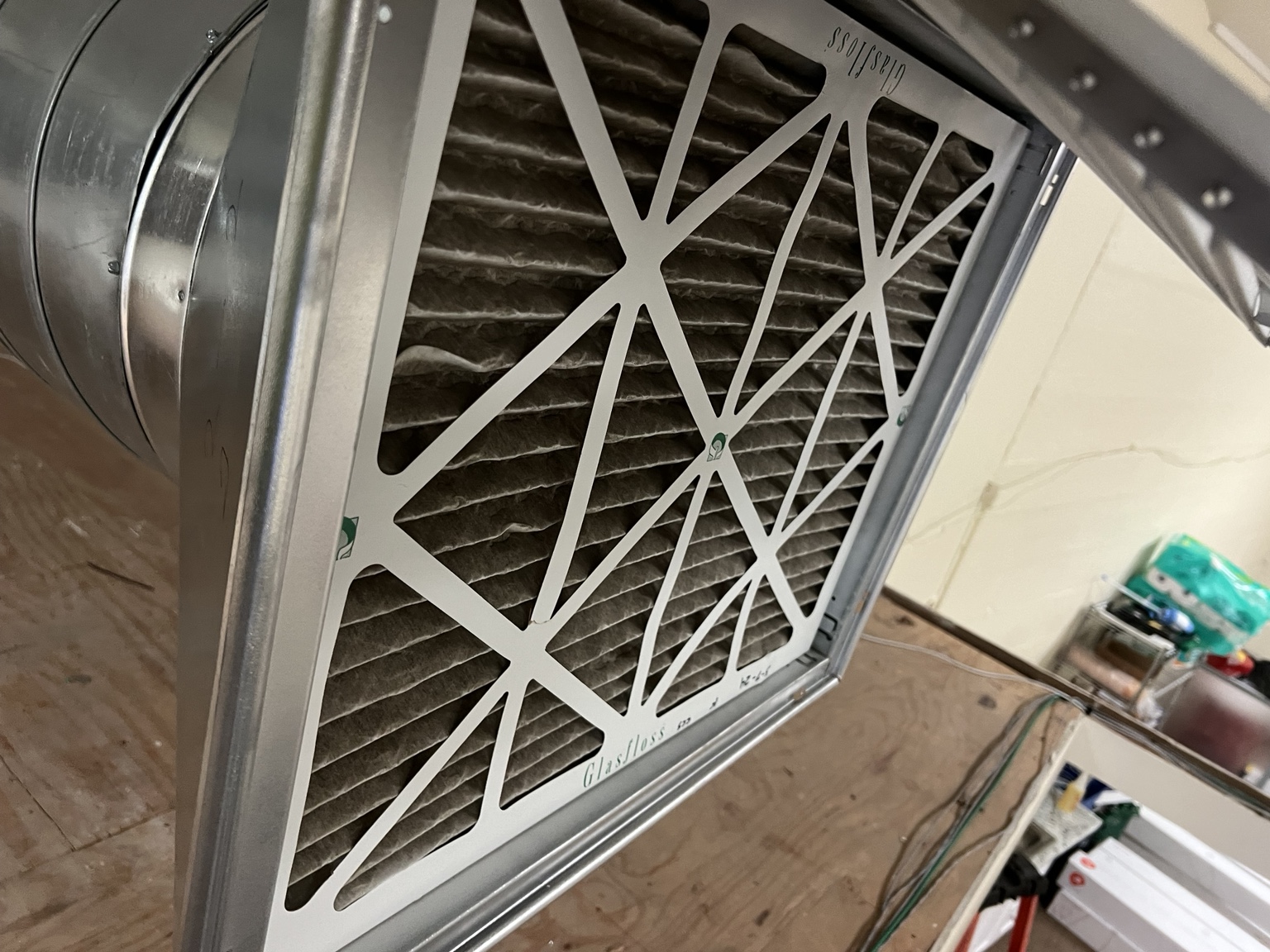
- Check the filter frequently. Smoke can load a filter faster than normal. Replace it if it becomes visibly dirty, develops an odor, or causes an airflow problem.
These recommendations come from the EPA’s current guidance on wildfires and indoor air quality. California residents can also use the California Air Resources Board’s Smoke Ready California resources.
Should the thermostat fan be set to Auto or On?
During a smoke event, “On” usually provides more filtration than “Auto.” In Auto mode, the blower runs mainly during a heating or cooling cycle. In On mode, the blower circulates air more continuously through the filter, even when the system is not actively heating or cooling.
Continuous operation can use more electricity, and it should not be used as a substitute for correcting a weak blower, damaged ductwork, or an overly restrictive filter. If the system sounds strained, airflow drops sharply, the coil ices, or rooms stop receiving normal airflow, return the fan to its usual setting and arrange an inspection. Fusion’s HVAC maintenance service can help determine whether the blower, return-air path, and filter cabinet are ready for longer run times.
Is MERV 13 always the right filter?
MERV 13 is a useful target for smoke particles, but it is not automatically safe for every furnace or air handler. A filter’s efficiency, thickness, surface area, condition, and fit all affect airflow. Some older systems or small filter cabinets cannot handle a dense one-inch filter without excessive pressure drop.
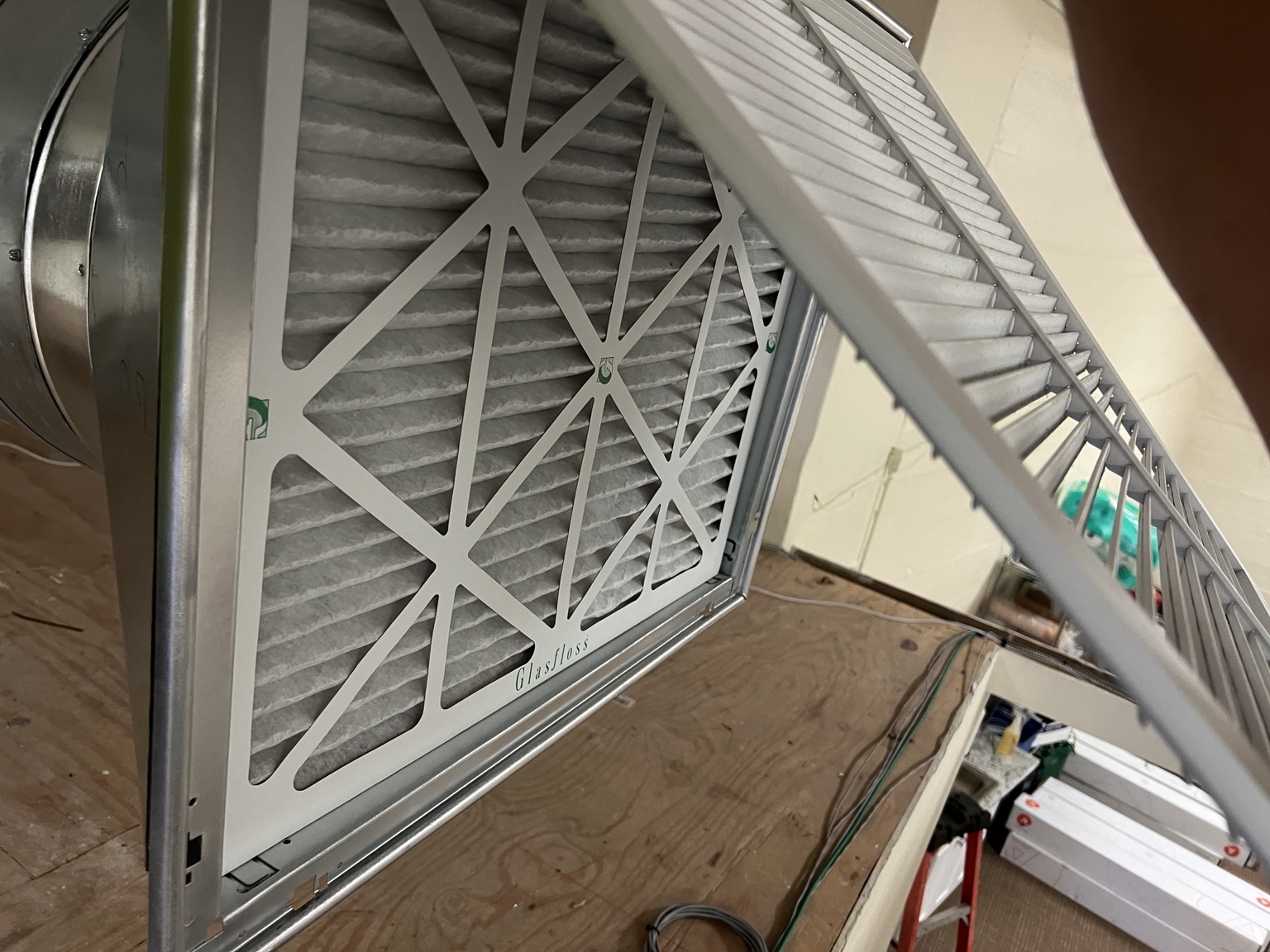
Use the highest MERV rating approved by the equipment manufacturer or confirmed by a qualified HVAC professional. The filter should fit snugly without gaps around the frame, and the airflow arrow should point toward the blower. Do not bend, crush, or stack filters to force them into the slot.
If you are unsure when to replace a filter under normal conditions, see our guide to changing HVAC filters in the Sacramento area. During smoke, inspect more often than the normal schedule because conditions can change quickly.
Know whether your equipment brings in outdoor air
Many residential central systems recirculate indoor air by default, but some homes have a dedicated fresh-air intake, energy-recovery ventilator, whole-house fan, economizer, or other ventilation control. Those components can introduce smoky outdoor air if they remain open.
Central air conditioner or heat pump
Keep cooling available when it is hot, but use recirculation and close any controllable outdoor-air intake. Do not block return grilles or supply registers. A system needs an unobstructed path to move air through the filter.
Whole-house fan
Leave a whole-house fan off while outdoor air is smoky. These fans are designed to pull large volumes of outdoor air into the home through open windows, which is the opposite of the goal during a smoke event.
Evaporative cooler
Evaporative coolers, sometimes called swamp coolers, depend on outdoor air. EPA guidance recommends using them sparingly during smoky conditions unless their intake is properly protected with compatible filtration. Do not improvise modifications that could create an electrical, moisture, or airflow hazard.
Portable or window air conditioner
Close the outdoor-air damper on a window unit if the manufacturer provides one, and seal gaps around the installation. Single-hose portable air conditioners can create negative pressure and draw smoky air through leaks elsewhere in the home; a dual-hose design generally reduces that effect.
Pair the HVAC filter with a cleaner-air room
Whole-home filtration and a correctly sized portable air cleaner can work together. Choose one room where household members spend significant time, keep its doors and windows closed when conditions require it, and limit activities that create particles indoors.
For wildfire smoke, EPA recommends a portable air cleaner with a smoke Clean Air Delivery Rate, or CADR, of at least two-thirds of the room’s area in square feet. California buyers should choose an air cleaner certified by CARB and avoid devices marketed primarily as ozone generators. Place the unit where air can move freely around it, and follow the manufacturer’s filter-replacement instructions.
Try to reduce indoor particle sources while outdoor air is poor. Smoking, candles, fireplaces, aerosol sprays, frying, broiling, and some vacuuming can raise indoor particle levels. Use exhaust equipment carefully because exhausting air can pull replacement air through leaks in the building envelope.
Signs your HVAC system needs professional attention
Wildfire preparation should not require guesswork about basic airflow. Schedule service if you notice any of the following:
- The filter does not fit the rack or air bypasses its edges.
- The blower becomes unusually loud after a filter upgrade.
- Airflow at multiple registers becomes noticeably weaker.
- The system cycles off unexpectedly or displays a fault.
- Dust or smoke odor appears to enter through visible duct leaks.
- The home has an outdoor-air intake and you cannot identify its control.
A technician can measure static pressure, verify the filter cabinet size, inspect return-air capacity, and identify outside-air connections. Homeowners near Roseville can learn more about our Roseville HVAC service area, while customers elsewhere can review our full heating and cooling services.
Wildfire smoke HVAC checklist
- Check AirNow and local emergency guidance.
- Close windows and exterior doors when outdoor air is smoky.
- Close the fresh-air intake or choose recirculate, if equipped.
- Install the highest-efficiency filter the system can safely support.
- Run the central fan more often when airflow remains normal.
- Inspect the filter frequently and replace it when dirty.
- Use a properly sized, CARB-certified portable air cleaner if needed.
- Reduce indoor activities that create smoke or particles.
Frequently asked questions
Should I turn off my air conditioner during wildfire smoke?
Not necessarily. Central air conditioning can help keep a closed home cool while recirculating and filtering indoor air. Close any controllable fresh-air intake. Equipment that depends heavily on outdoor air, including many evaporative coolers, needs different handling.
Can I put a MERV 13 filter in any furnace?
No. MERV 13 is recommended for smoke only when the system fan and filter slot can accommodate it. Check the equipment documentation or have an HVAC professional verify compatibility and airflow.
How often should I change my HVAC filter during smoke?
There is no single calendar interval for every event. Check it often and replace it when visibly dirty, odorous, damaged, or associated with reduced airflow. Heavy smoke may require replacement sooner than the normal schedule.
Does a higher MERV number always mean better indoor air?
A higher rating captures smaller particles more efficiently, but only when the system can move enough air through the filter. Correct fit, adequate return-air capacity, and timely replacement matter as much as the number on the label.
Prepare before the next smoky day
The best time to identify your fresh-air control, confirm filter compatibility, and correct airflow problems is before smoke settles over the region. Fusion Heating & Cooling serves homeowners and businesses across Placer, Sacramento, El Dorado, Nevada, Yolo, Sutter, Yuba, and Amador counties. If you want help checking your system’s filtration and airflow, request HVAC service online or call 916-666-0074.