A bubbling or sloshing sound starts near the furnace, followed by another interrupted heating cycle. It can sound like a struggling motor from the next room. Replacing the motor on that description alone risks leaving the actual problem untouched.
For a Folsom home with a condensing gas furnace, the investigation needs to include the water produced during heating. We also need to establish whether the noise and the shutdown come from the same problem. Two events happening together are useful clues, not proof.
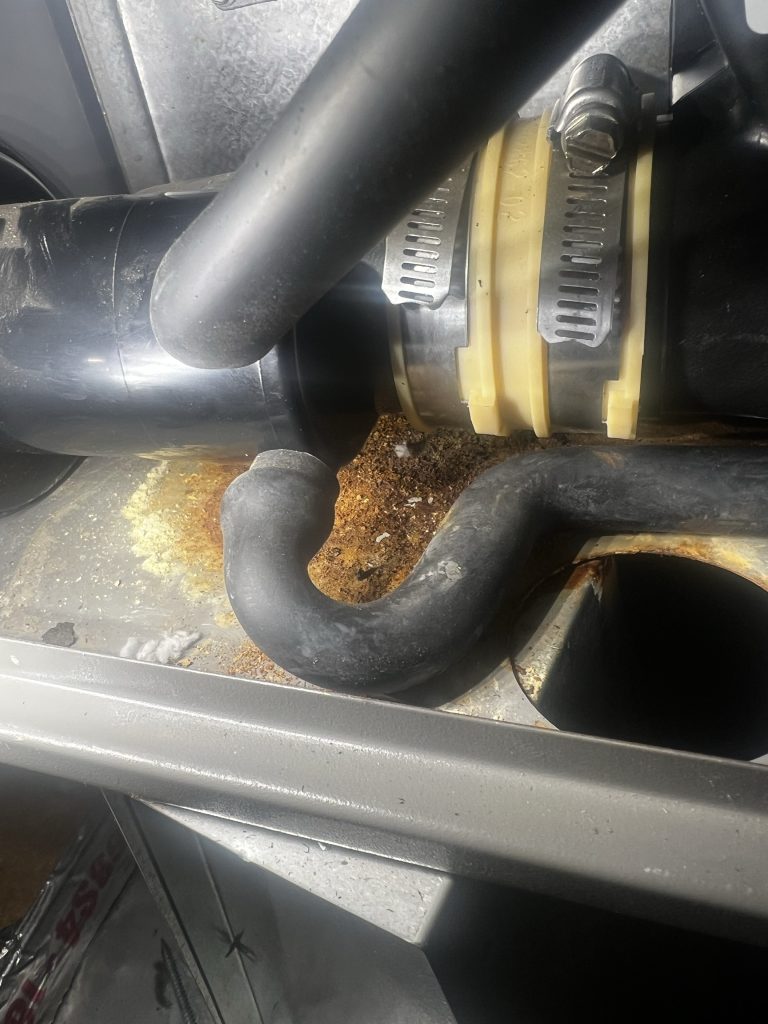
No puddle does not rule out a drainage problem
A condensing furnace collects water internally and routes it through its designed drainage system. A restriction can affect that path before water becomes visible on the floor. Carrier’s furnace water guidance identifies gurgling among possible clues to a water or drainage issue.
This is not a universal explanation for furnace noise. A nearby condensate pump, humidifier or plumbing drain can make sounds that travel through the same space. A rattle or bearing noise may also be described as a gurgle over the phone. Start with where you hear it and when it happens.
The trap, internal hoses and external pump do different jobs
A pump beside the furnace may be empty and working while water is restricted upstream. Conversely, an external discharge problem can need attention even if the furnace’s internal connections are clear. The inspection follows the whole route rather than treating the pump as the entire drainage system.
As one model specific example, the Oxbox J962X installation manual describes an overflow pressure switch that stops operation when blocked hoses or a trap allow water to rise in the collector. It also shows different drainage arrangements for different furnace orientations. Your furnace may use a different protection scheme. A similar sound is not evidence that this particular switch has failed.
Useful observations without opening the cabinet
Note whether the sound begins before warm air arrives, continues throughout heating, or appears after shutdown. Save a short recording from a safe location if the noise is already happening. There is no need to restart the furnace just to capture it.
Tell us about any recent service or work around the drain. Record a fault message visible on the normal display, and mention any water near the cabinet. Keep away from standing water around electrical equipment. If safely accessible, turn heating off at the thermostat and arrange service for a recurring noise accompanied by loss of heat.
Leave panels, hoses and traps in place. Do not blow into pressure tubing, pour household drain chemicals into the furnace, or bypass a switch to restore heat. Gas odor or a carbon monoxide alarm requires leaving the building and calling emergency help from outside.
Why a motor guess can miss the real cause
A gurgling sound is different from the hum, scrape, rattle or squeal commonly used to describe moving parts. Water moving through a trap or drain can sound like bubbling, while a struggling inducer or blower can change pitch as the furnace starts and stops. The sound description helps, but it does not replace testing. Our inducer-versus-blower noise guide explains why the point in the heating sequence matters.
A useful diagnosis should connect three things: where the sound is loudest, when it begins, and which safety or control ends the heating cycle. Replacing a motor solely because a homeowner reports gurgling can leave a restricted drain, blocked trap, failing condensate pump or damaged hose unresolved. Clearing a drain without checking the shutdown can miss an electrical or airflow fault. The repair should fit the evidence from the exact furnace.
When water and shutdown symptoms need prompt attention
Turn the thermostat to Off and avoid the furnace area if water is reaching wiring, the disconnect, a receptacle or another electrical component. Do not open the cabinet or move hoses to look for the source. A gas odor, smoke, a burning electrical smell or a carbon monoxide alarm requires immediate action under the utility, fire department or alarm manufacturer instructions rather than continued troubleshooting.
If the floor is dry but the furnace repeatedly stops, record the thermostat message, error code if one is visible without opening a panel, the approximate run time and whether the sound occurs before or after the burners light. If water later appears, our water-around-the-furnace guide explains safe observations. For a visibly full external pump, see the condensate-pump no-heat checklist.
Furnace gurgling questions homeowners ask
Can I keep running the furnace if it starts again?
Repeated restarts are not proof that the problem cleared. If the furnace stopped unexpectedly and gurgling returns, leave it off and arrange diagnosis. Continuing to reset power can erase useful fault history and may allow more water to collect.
Does gurgling always mean the condensate pump failed?
No. Some condensing furnaces drain by gravity, while others use an external pump. The sound can involve the internal trap, a hose, the venting or another component. The equipment layout has to be identified before a pump is blamed.
Can a blower or inducer motor cause the sound?
A motor can create hums, rattles or changing tones, but sound descriptions overlap. A technician should observe the start sequence, test the relevant components and confirm whether drainage and motor operation are related or separate issues.
Ask what explains both the noise and the shutdown
A technician can inspect the drainage arrangement against the exact model instructions, locate any obstruction or damaged connection, and identify which control interrupted heating. If drainage is normal, the investigation needs to continue into the actual noise source and operating fault rather than force a drainage diagnosis.
The resulting work may be a serviceable trap cleaning, hose or connection repair, correction of an installation problem, or a separately confirmed component repair. Ask how water flow and complete heating operation will be checked afterward. Quiet operation for a few seconds is not enough to establish that a recurring shutdown has been resolved.
An isolated drainage repair does not by itself call for a replacement furnace. Additional damage or a major component fault needs its own documented finding. Include the condensate path in professional maintenance; Trane’s maintenance checklist includes drain inspection for cracks and clogs.
Contact Fusion Heating and Cooling Inc. about furnace repair with the model number, sound recording and timing of the lost heat. Those details help us distinguish water movement from a motor complaint before recommending parts.