
The customer called because the air conditioner was not cooling as well as it used to. Fusion Heating & Cooling inspected the older R-22 system in Auburn, CA and found two major maintenance problems: the condenser coil was heavily blocked with dirt and debris, and the return-air filter was plugged.
We replaced the air filter and thoroughly cleaned the condenser coil so the system could move air and reject heat correctly. After the air conditioner ran for about 20 minutes, further testing showed a separate problem: the refrigerant charge was low.
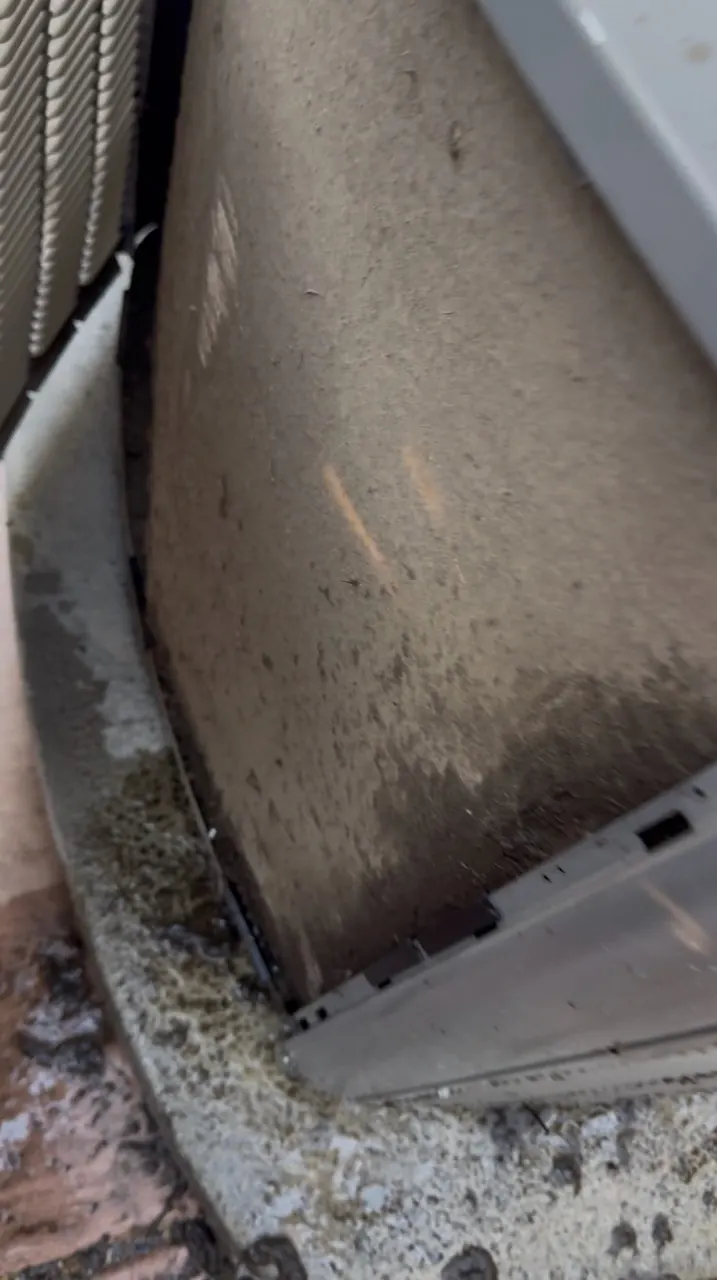
What We Found During This Auburn AC Service Call
The dirty filter was restricting airflow through the indoor section of the system. At the same time, the plugged condenser coil was limiting the outdoor unit’s ability to release heat. Both conditions can reduce cooling capacity, increase operating temperatures, and force an aging air conditioner to run longer than normal.
Cleaning the coil and replacing the filter corrected the visible maintenance problems. Once airflow and heat transfer were restored, we allowed the system to operate and then checked its cooling performance. The unit was still low on R-22 refrigerant.
Low Refrigerant Means the System Has Lost Charge
An air conditioner does not normally consume refrigerant. When a sealed system is low on charge, refrigerant has escaped somewhere. The exact leak location was not identified on this visit because the customer selected a recharge-only option instead of a full leak search.
Deferred maintenance can place extra stress on an older system, but a dirty coil or filter alone does not prove where a refrigerant leak began. A dedicated leak inspection is needed to locate the leak and determine whether the damaged component can be repaired economically.
Three Options Discussed With the Customer
We explained the condition of the system and reviewed three practical options:
- Replace the air conditioner. This was our primary recommendation because of the unit’s age, overall condition, R-22 refrigerant, known refrigerant loss, and the possibility of additional repairs.
- Perform a leak search and repair. This option would involve locating the source of the refrigerant loss, evaluating the affected component, repairing it when practical, and then completing the required sealed-system procedures before charging and testing the unit.
- Complete a temporary R-22 recharge. This was the lowest-cost immediate option, but it would not repair the leak. The system would be expected to lose charge again, and no one could accurately predict whether that would take days, weeks, months, or longer.
The customer was working within a limited budget and chose the temporary recharge after the limitations were explained.
Temporary R-22 Recharge Restored Cooling
Fusion Heating & Cooling maintains an available service supply of R-22 for qualifying existing systems. We recharged this Auburn air conditioner and verified that it was cooling again at the end of the visit. No refrigerant quantity, pressure reading, or leak location is stated here because those details are specific to the service record and the exact equipment.
The customer understands that the recharge did not seal the leak. The system will eventually become low again unless the leak is found and repaired, or the equipment is replaced. The timing cannot be predicted from a recharge alone.
Can R-22 Air Conditioners Still Be Serviced?
Yes. R-22 equipment itself is not banned from operating or being serviced in the United States. U.S. production and import of new R-22 ended on January 1, 2020, but existing systems may still be serviced with recovered, recycled, reclaimed, or previously produced R-22.
The U.S. EPA guidance for homeowners explains the R-22 phaseout and confirms that existing equipment can continue to be serviced. Refrigerant must be handled by properly certified technicians, and intentional venting is prohibited.
Why Maintenance Still Matters
A clean condenser coil and a properly sized, clean air filter help an air conditioner move heat efficiently. Routine maintenance can reduce operating stress, reveal developing problems earlier, and help prevent a dirty system from masking other issues such as a low refrigerant charge.
Maintenance cannot repair an existing refrigerant leak, but it gives the technician a more reliable operating condition for diagnosis and helps the customer make a better repair-or-replace decision.
Need AC Repair in Auburn, CA?
If your air conditioner is running but not cooling like it used to, the cause may involve airflow, a dirty outdoor coil, electrical components, refrigerant loss, or more than one problem at the same time. Fusion Heating & Cooling provides AC diagnostics, maintenance, leak detection, repair, and replacement options in Auburn and nearby communities.
Call (916) 666-0074 or request service online for AC repair in Auburn, CA.
Frequently Asked Questions
Why was this Auburn air conditioner not cooling properly?
The system had a plugged air filter, a heavily blocked condenser coil, and a low R-22 refrigerant charge. Replacing the filter and cleaning the coil corrected the maintenance restrictions, while the low charge showed that refrigerant had been lost.
Does adding R-22 repair a refrigerant leak?
No. A recharge can restore cooling temporarily, but it does not seal the leak. The refrigerant level will fall again unless the source of the leak is located and repaired.
Why was replacement recommended?
Replacement was recommended because of the equipment’s age, condition, use of R-22, and known refrigerant loss. The customer chose a temporary recharge because it fit the immediate budget.
How long will a temporary recharge last?
There is no reliable way to know without locating and evaluating the leak. The rate of refrigerant loss can change, so the system may stop cooling again at an unpredictable time.