
The lights are back on, but the mini split still will not warm the room. The remote display looks normal. Is the outdoor board damaged, or is the system waiting to restart?
For an Auburn home relying on ductless heating, the useful distinction is between a normal recovery sequence and a persistent equipment fault. We start with the exact model and what the indoor unit is doing. An outage happening first does not prove a surge damaged the system.
Give the normal restart sequence time
Some mini splits automatically resume their previous operation after power returns. Daikin’s Polara service manual describes automatic restart for that product family. Other models or configurations may behave differently, so use your own operating instructions rather than assume every system restarts itself.
Use the normal remote to confirm heating mode and a target above room temperature. Then allow the startup time specified by the manufacturer. Repeatedly pressing buttons or switching power off can interrupt the sequence you are trying to observe.
Daikin’s troubleshooting guidance distinguishes protective restart delays from faults and notes that warm airflow may not begin immediately in heating mode. A brief pause is different from a room continuing to cool while the system never resumes.
The wall unit tells more than the remote
A battery powered remote can display a temperature even when the equipment has no power. Note whether the indoor unit acknowledges a command, whether its lamp is dark, steady or flashing, and whether an actual error code appears.
Photograph the light pattern or code before any reset. Count flashes only if your model’s instructions use that method. One manufacturer’s blinking pattern cannot be used to diagnose another brand, and not every indicator is a fault lamp.
Also tell us whether all indoor units stopped or only one. Several rooms sharing an outdoor unit create a different diagnostic picture from independent single room systems. The household lights coming back on does not establish that every HVAC circuit has proper power.
When waiting is no longer the answer
If the specified delay has passed and heat does not return, arrange service. A recurring fault light, repeated breaker trip, electrical odor or abnormal noise calls for stopping operation rather than repeated attempts. Keep clear of any wet electrical equipment.
We check the supply and the equipment’s response, retrieve available fault information and follow the model’s service procedure. Power supply trouble, an interrupted communication path or a component failure can require different repairs. A board replacement needs evidence beyond “it happened after the outage.”
Do not open the outdoor electrical compartment, probe terminals or attempt to discharge components. Inverter equipment can retain dangerous electrical energy after power is disconnected. Leave internal electrical and refrigerant checks to a qualified technician.
Start with observations that survive a reset
Before changing settings, record what the system is doing. A photo or short video of the indoor indicator lights can preserve information that disappears after power is cycled. Note the outage time, whether the unit was heating when power failed, and whether every indoor head connected to the same outdoor unit stopped.
- No lights or response at the indoor unit: the unit may not have power, even if the handheld remote still has a display.
- A steady operating light but no warm air: the system may be in a normal heating delay, defrost, or a fault that needs model-specific interpretation.
- A flashing light or displayed code: photograph it and check the exact model manual. Codes and flash patterns are not universal.
- A breaker that trips again: leave it off. Repeated resets can hide an intermittent fault and are not a repair.
- One head works and another does not: note the mode shown on each controller. Our guide to one mini split zone not heating explains why multi-zone mode conflicts matter.
Use only the normal controls described in the owner’s manual. Do not remove electrical panels or reach into the outdoor unit. If there is smoke, a burning odor, damaged wiring, water at electrical equipment, or repeated breaker tripping, stop using the system and arrange professional service.
Why house power can return while the mini split stays off
The lights and receptacles in a home can work while the dedicated HVAC circuit is still open. A mini split may use an outdoor disconnect, overcurrent protection, and wiring that supplies or communicates with one or more indoor units. The location and design depend on the installed equipment, so a visual check at the electrical panel does not prove correct voltage is reaching the system.
A battery-powered remote creates another false clue: its screen can look normal with no power at the equipment. If the wall unit does not acknowledge a command, compare that symptom with our guide to a mini split not responding to its remote. That article separates remote, receiver, and equipment-power clues.
What a complete service diagnosis should verify
A good diagnosis follows the evidence instead of naming a control board from the timing alone. Depending on the model and symptoms, a technician may verify the electrical supply at the required points, check disconnects and fuses safely, retrieve stored faults, inspect indoor-to-outdoor communication, and test whether the system follows a heating command.
The technician should also confirm that the repair restored ordinary operation. That includes the affected indoor heads, remote controls, heating output, and any saved settings. If a surge-damaged component is suspected, ask what measurement or fault evidence supports that conclusion and whether other connected components were checked.
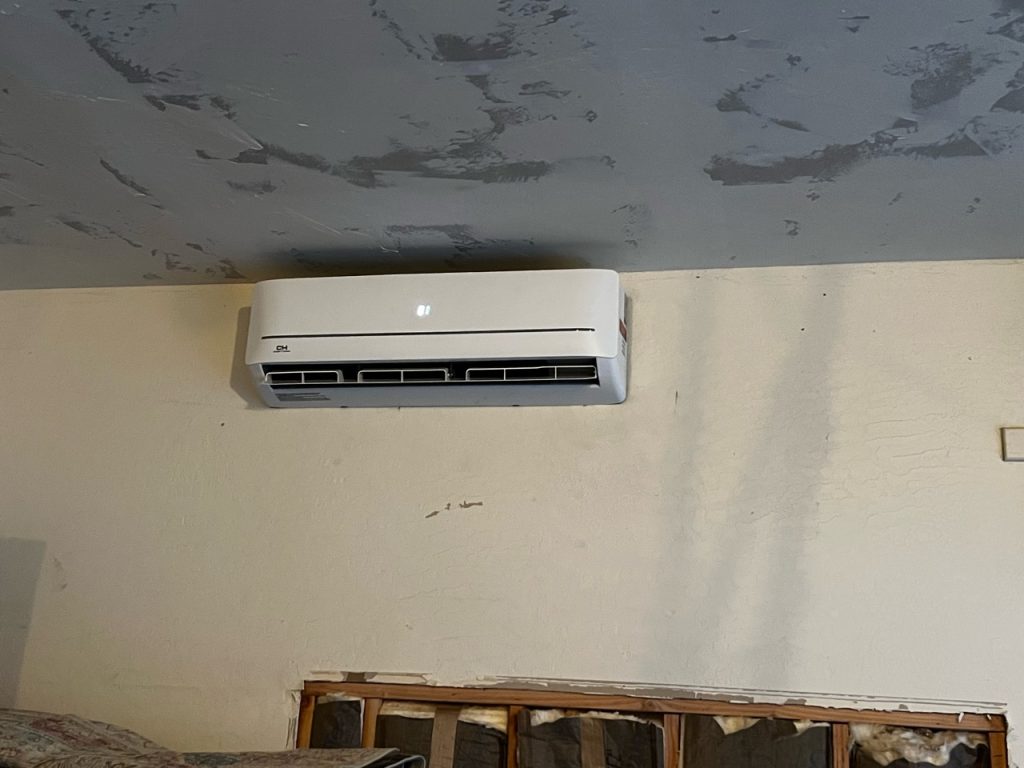
For an example of the type of equipment installed locally, see Fusion’s documented Auburn garage mini-split installation. The project photos identify the equipment shown; they do not imply that installation had the outage problem discussed here.
Mini split outage questions
Should I keep resetting the breaker?
No. If the dedicated breaker trips again, leave the system off and arrange service. A recurring trip needs a cause, not repeated attempts to force the equipment to run.
Does a three-minute wait prove the system is normal?
No. Some models use a protective delay, and Daikin documents a short delay for certain restart conditions. Your model’s manual controls the expected behavior. If the specified time passes and the unit still does not respond or heat, the remaining symptom needs diagnosis.
Does an outage mean the control board is ruined?
No. A board can fail, but outage timing alone does not prove it. Power supply, protection devices, settings, communication, and stored fault information should be checked before a major electronic part is recommended.
Restore heating, then verify normal control
A corrected setting or confirmed connection fault may need a limited repair. A failed electronic component needs compatibility checks and an explanation of the test results. Ask whether the entire system was tested afterward, including the affected indoor units and ordinary remote operation.
Replacement of the whole mini split is a separate decision based on the confirmed damage, equipment condition and repair options. A single outage does not settle it. Keep model numbers and operating instructions available, and ask about the installed restart behavior before depending on unattended winter heating.
Contact Fusion Heating and Cooling Inc. for ductless heating repair with the outage timing, model numbers and any light pattern. If the room cannot remain safely warm, arrange another heated place while the fault is assessed.