A furnace that keeps shutting off can leave you wondering whether the thermostat, the heater or a safety control is causing the problem. At this home in Newcastle, CA, Fusion Heating and Cooling Inc. found a failed inducer fan motor in a high-efficiency furnace. We installed a new inducer motor and cleaned a dirty flame sensor. After the work, the furnace was heating again without the shutdown problem.
This project shows why a heating repair should follow the diagnosis. The homeowner’s concern was repeated shutdowns; the work needed was a specific component replacement and flame sensor cleaning, not a complete furnace replacement.
A Newcastle furnace that would not stay running
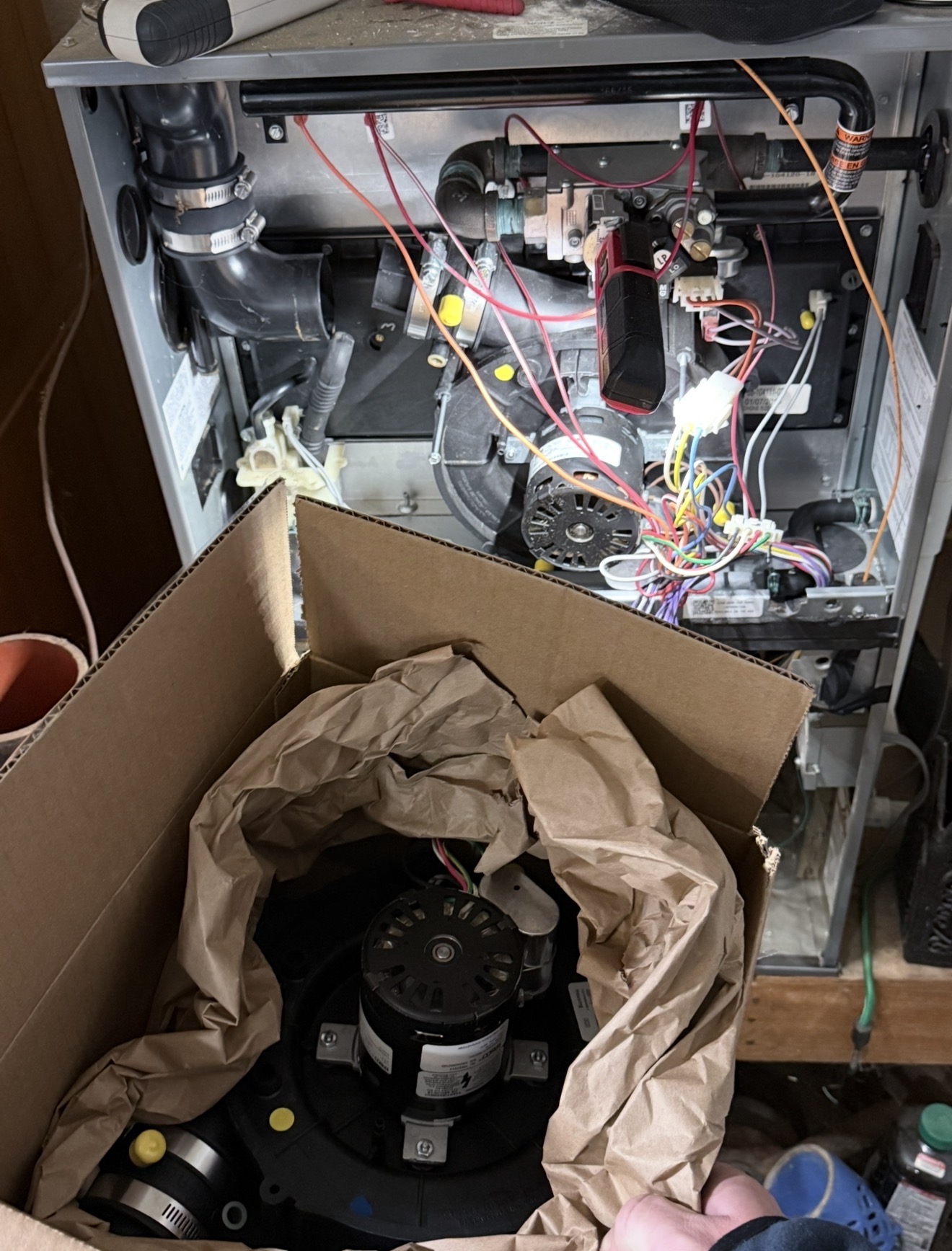
The problem on this call was a furnace that kept shutting down. We found the inducer fan motor had failed and replaced it with a new one. We also found the flame sensor was dirty and cleaned it during the service.
Completed work: Inducer fan motor replacement and flame sensor cleaning. Result: Heating was restored, and the furnace no longer shut down during the post-repair operation.
How a failed inducer motor can interrupt heating
The inducer fan is part of the furnace’s combustion and exhaust system. It helps establish the draft needed for the heating sequence. The furnace controls check operating conditions before allowing the burners to run. If the required draft cannot be established or maintained, the heating sequence can be interrupted.
The inducer is different from the main blower that sends air through the home’s vents. Replacing one motor does not mean the other needs replacement. On this Newcastle project, we identified the inducer motor as the failed component and installed a new one to address that failure.
High-efficiency furnace troubleshooting can also involve the venting, pressure-sensing components and condensate drainage. A fault code or repeated shutdown needs to be evaluated in the context of the equipment.
Why we also cleaned the dirty flame sensor
The flame sensor helps the control board confirm that a flame is present after ignition. Contamination can interfere with that signal, and a furnace may shut the burners off when flame is not reliably detected. A furnace that lights and then stops shortly afterward can therefore need a flame-sensing check.
We found a dirty flame sensor on this visit and cleaned it. That was additional work alongside the inducer replacement. Cleaning the sensor would not repair a failed inducer motor; both findings needed attention.
For general background, Trane’s homeowner guidance on burners shutting off after ignition describes flame-sensor and other possible shutdown causes. The diagnosis for each furnace still depends on what is actually happening during its heating sequence.
Furnace starts then stops: what the timing can tell you
Homeowners may describe several different symptoms as “furnace short cycling” or “heater keeps turning off.” A system that stops before ignition behaves differently from one that lights briefly or heats for several minutes before shutting down. That timing is useful information when requesting service.
- Stops before producing heat: Tell us whether you hear the startup fan and whether the furnace appears to attempt ignition.
- Lights, then quickly shuts off: Mention whether this repeats and whether a fault code is visible through the viewing window.
- Heats for a while, then stops too soon: Tell us whether the home reached the thermostat setting and whether airflow changed.
These observations help describe the problem; they do not identify a replacement part on their own. You do not need to remove furnace panels or touch wiring to provide a useful description.
What to check when your heater keeps shutting off
Confirm that the thermostat is in HEAT mode and still calling for a temperature above the room temperature. Check an accessible air filter with the equipment turned off, following the owner’s manual, and keep return grilles and supply registers clear.
If shutdowns continue, arrange a professional diagnosis rather than repeatedly resetting the furnace. Never bypass a pressure switch, flame sensor or other safety control. If you smell gas or a carbon monoxide alarm sounds, leave the building and call 911 from a safe location.
Questions about this Newcastle furnace repair
Did the furnace need to be replaced?
No. For this project, replacing the failed inducer motor and cleaning the flame sensor restored operation in the existing furnace. Another system may need a different repair, so replacement decisions should follow an assessment of its condition and the available options.
Does every furnace that keeps shutting off need a flame sensor cleaning?
No. The same complaint can have different causes. In this case we found both a failed inducer motor and a dirty flame sensor. Treating only one suspected part without diagnosis can leave the original problem unresolved.
What affects the cost of this kind of furnace repair?
The required inducer motor or assembly, furnace model, parts coverage, access and labor all affect the estimate. Ask what the quote includes and which diagnosis supports the proposed work. We can evaluate your equipment and explain the repair options before approved work begins.
Schedule furnace repair in Newcastle, CA
If your furnace keeps shutting off in Newcastle, starts then stops, or will not stay on long enough to heat the house, contact Fusion Heating and Cooling Inc. Tell us when it shuts down, whether it produces heat first and any visible fault code.
Visit our Newcastle furnace repair and HVAC service page or learn about our heating diagnostics and repairs.
Call (916) 666-0074 or request service online. Browse more Newcastle HVAC projects to see local heating and cooling work.